Springer Nature cordially invites all interested participants to its webinar on Thursday, 23 April 2026.
Further details about the event:
Tips and tricks to enhance your research visibility after publication
Date & Time: 23rd April (Thursday), 3:00-4:00 PM CEST
In this webinar, you will learn effective approaches to maximize the impact of your research after publication. We will cover best practices for sharing your work on academic platforms and scientific social networks, proven methods for engaging with relevant research communities, and how to interpret altmetrics as a valuable complement to traditional citations.
Discover how a well‑planned communication strategy can significantly expand your reach and spark meaningful conversations in your field. Don’t wait for others to find your research—learn how to take an active role in amplifying your contribution to global scientific progress.
Clarivate warmly invites all interested participants to its webinar designed for researchers, librarians, and research support professionals. Built around the responsible use of AI in the scholarly environment, the webinar introduces AI-powered tools developed by Clarivate that support research workflows, along with practical guidance on how to use them. The webinar is available in both English and Hungarian.
Details of the English webinar:
Getting Academic AI Right: Clarivate Tools for AI-Powered Research Workflows
Date & Time: 23 April (Thursday), 3:00–4:00 PM CEST
The webinar explore what it means to use AI responsibly in scholarly environments and why the underlying data and design principles of AI systems matter for discovery, evaluation, and knowledge creation. With this perspective in mind, it introduces the latest Clarivate innovations designed specifically for the research community:
In the K21 Quality Management Coordination Committee’s first-quarter report for 2026, the working group leaders provided an overview of the results from the past quarter, as well as ongoing work and changes.
On 20 February 2026, the K21 Quality Management Coordination Committee approved the 2025 University Library Service Quality Improvement Report via an online vote. At the meeting, the final version of the ELTE University Library Service’s strategic objectives for the 2026–2030 period was also unanimously approved. The document defines the ELTE University Library Service’s tasks, development directions, and key intervention points in line with the university’s strategy. The sections of the 2026 ELTE-wide staff service survey and student survey questionnaires pertaining to library services were reviewed by the Primary Research Working Group and approved without changes. The Process Management Working Group asked the process owners to prepare key process descriptions, two of which have been completed.
The Communications Working Group provided information about the tasks carried out and results achieved by the working groups via the website, the ELTE University Library Service’s newsletter, and the short film entitled “3 Months – 3 Minutes” on the Kolibri mailing list, and contributed to the successful preparation and administration of the K21 reporting days meetings. They contributed to the publication of additional news on the ELTE Libraries website, which also appeared in the newsletter. The Green Library working group compiled the data from the Green Library questionnaire, and a report is being prepared.
Members of the Library Directors’ Working Group prepared the member libraries’ 2025 reports, dissemination reports, this year’s work plans, and school outreach plans; they approved the reports and this year’s work plans of the member libraries and the ELTE University Library Service, as well as the ELTE University Library Service’s Quality Improvement Report. They collected and submitted the libraries’ statistical data by an earlier deadline than in previous years. In addition, they reviewed the ELTE University Library Service’s strategy adopted in 2024 and aligned it with ELTE’s strategic goals for the 2025–2030 period, indicating that the libraries play an active role in achieving ELTE’s strategic goals. Four meetings were held in the first quarter to discuss the new strategy, the updating of assimilation documents, Open Access quotas, digitized theses and those received from Neptun, and the DoTS project.
An update on the achievements of the K21 Quality Coordination Committee and our new developments will be posted on our website soon.
Sándor, a recently widowed father, finds himself facing a serious moral dilemma. He becomes the sole witness to a serious accident caused by his troubled teenage son. Sándor must decide: will he bear the burden of the truth and the consequences that will ruin his son’s life, or will he cover up the act, which in turn will distort the boy’s psyche for life? His paternal instincts push him toward the latter.
Growing Down explores important moral questions. Is everything really fine? The world has entered an age of honesty, yet we play games every day – especially with those we love the most. Our image of the family is still filled with idealized expectations: harmony, love, unconditional support. But what happens when reality doesn’t fit this picture? Love sometimes builds walls – walls that can become prisons if speaking the truth threatens our own mental or physical freedom.
Date: 15 April 2026, 6:00 p.m.
Venue: ELTE University Library and Archives, Community Space (Budapest, 6 Ferenciek Square, 5th District, ground floor)
Director: Bálint Dániel Sós
Screenplay: Bálint Dániel Sós, Gergő V. Nagy
Cinematographer: Kristóf M. Deák
Editor: Márton Gothár
Music: Máriusz Fodor, Ambrus Tövisházi
Starring: Szabolcs Hajdu, Ágoston Sáfrány, Anna Háy, Zoltán Friedenthal, Rita Kerkay.
Our guests for the post-screening discussion: Liliána Révész, psychologist, grief counselor, and story therapist, as well as Bálint Dániel Sós, the film’s director.
To mark Hungarian Poetry Day, on April 8, 2026 (Wednesday) at 4:00 p.m., poet Ágoston Szauer, a teacher at ELTE’s Bolyai Training Institute in Szombathely, will present his latest collection of poems, titled Mindenek mögött (Behind Everything), in the event hall on the second floor of the ELTE ULA Savaria Library and Archives.
In the poems of this collection, published in February, the author explores the relationship between God and man, earth and sky, body and soul. Ágoston Szauer’s poetry explores the connections behind the visible world, attempting to give voice to the almost unspeakable: in his poems, which hint at brief, subtle vibrations and are interwoven with silences, the emphasis is on inner attention and contemplation.
At the book launch, a discussion related to the volume will be moderated by Dániel Szauer, a university student.
Zoltán Kelemen, an actor at the Sándor Weöres Theater, will read selections from the poems, accompanied on the piano by Marcell Kardos, a student majoring in Hungarian language and music.
The event is organized by the Department of Hungarian Literary Studies and the Department of Hungarian Linguistics at ELTE Dániel Berzsenyi Teacher Training Center.
The ELTE–NFI University Film Club screening and discussion series continues. We welcome university members from all ELTE faculties.
In a joint program with the ELTE Faculty of Law’s Student Research Group on Criminal Procedure and Penitentiary Law, we will use the film to trace the life story of Attila Ambrus – the criminal infamous as “the Whiskey Bandit” – and the crimes he committed. The former hockey player robbed some 29 financial institutions, post offices and travel agencies over a six-year period and successfully evaded law enforcement for a long time. The Hungarian public followed his actions with keen interest.
Following the release of Control, Nimród Antal returned to audiences with another significant film, introducing one of Eastern Europe’s most notorious criminals. Yonderboi’s music perfectly underscores the action scenes, of which this film has no shortage.
Date: 8 April 2026, 6:00 PM
Venue: ELTE University Library and Archives, Community Space (1053 Budapest, 6 Ferenciek Square, ground floor)
Director, Screenwriter: Nimród Antal
Cinematographer: Péter Szatmári
Editor: Zoltán Kovács
Music: Yonderboi
Starring: Bence Szalay, Piroska Móga, Zoltán Schneider, Viktor Klemm.
Guest for the post-screening discussion: Dr. László Jován, attorney and adjunct lecturer in the Department of Criminal Procedure and Penitentiary Law at the Faculty of Law. Representing the student research group in the discussion will be Laura Leszkó, law student and teaching assistant.
With the support of the ELTE University Film Club, the National Cultural Fund (NKA), and the Hungarian Documentary Filmmakers’ Association (MADOKE), a documentary film screening series featuring works by Hungarian filmmakers is being launched. The next screening will feature Balázs Simonyi’s 2017 film Ultra.
Date: Tuesday, April 14, 6:00 p.m.
Venue: University Square Campus, Weiss Emilia Hall (1053 Budapest, Egyetem tér 1–3., ground floor, in the hallway next to the coat check)
How far must you go to get closer to yourself? Ultra takes you to the limits of physical endurance and the depths of the human soul. Balázs Simonyi and his film crew document the struggles of five competitors in the legendary Spartathlon race – and what makes the film truly unique is that the director is himself a multiple finisher, and one of the five protagonists is the filmmaker himself.
The Spartathlon has a time limit of 36 hours; during this race, which winds from Athens to Sparta and conquers a 1,200-meter-high mountain, finishers cover 246 kilometers. Commemorating an ancient legend, this test of strength – one of the toughest and most prestigious races in the world – concludes in front of the statue of King Leonidas.
We learn about the competitors’ personal motivations – both during the race and beyond – and why they’re taking on this extreme distance. The toughest challenge faces Béla, a small-town financial controller who has already tried five times without success – the organisers won’t accept his entry, so he’s running a “Private Spartathlon”: he’ll set off from Athens when the others have already arrived in Sparta. Will he reach the finish line on his sixth attempt, relying solely on himself and his wife’s help?
Made with state-of-the-art technology and rich in spectacular drone footage, Ultra is a one-of-a-kind, unforgettable cinematic experience. In 2017, the film was shortlisted for the European Film Award, among 15 films deemed worthy of the honor.
Our guests for the post-screening discussion are Balázs Simonyi, the film’s director and lead actor, and producer László Józsa.
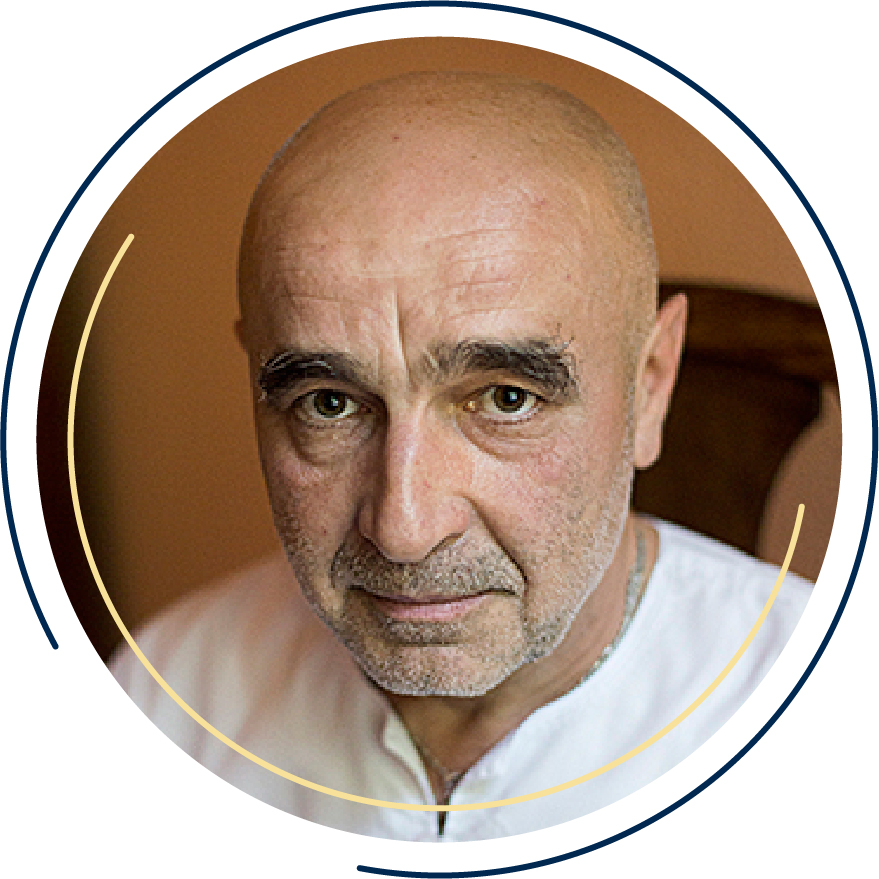
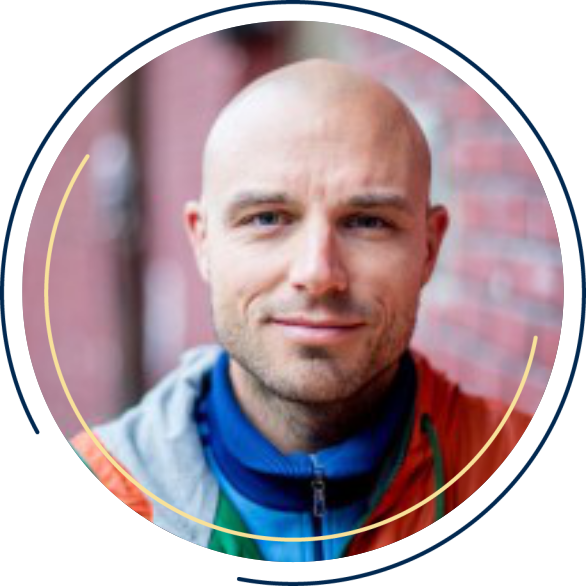
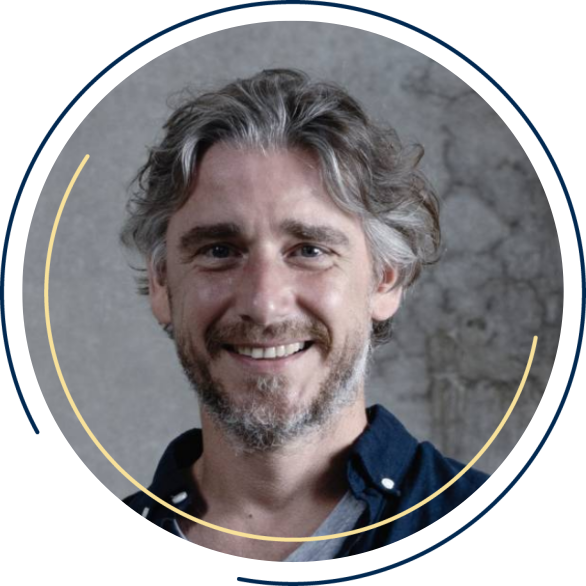
Balázs Simonyi László Józsa
Dr. Balázs Simonyi studied at the Faculty of Humanities at ELTE between 1998 and 2006, earning degrees in film theory/film history, Hungarian language and literature, and aesthetics. He studied at the Doctoral School of Philosophy at ELTE’s Faculty of Humanities, and in 2025 earned a PhD from the Doctoral School of Literary Studies at Pázmány Péter Catholic University on the topic of contemporary documentary film. Since 2002, he has been a freelance creative: he produces films and long-term photo series, as well as commercials, image films and television programs. His films have been invited to hundreds of festivals, including several Oscar-nominated events and A-category film festivals.
László Józsa, cinematographer and producer, is the head of the Speak Easy Project (SEP). The founders established the Berlin-based sister company in 2014. SEP produces commercials, communication projects, television programs, and documentaries.
Seating is limited, so please register in advance by email.
Join this webinar to learn about the Royal Society's journals – a home for excellent scientific research for over 360 years.
Date & Time: April 13th (Monday), 3:00 PM CEST
Presenter: Sophie Ferguson
Providing a broad coverage of science, technology, engineering and mathematics, much of the research published by the Royal Society is cross-disciplinary and broad interest.
Come along to this webinar to learn about the journals, the submission process, and author journey, and hear how else the Royal Society can support you. There will also be the opportunity to ask questions.
For 2026, the eight subscription journals are open access without payment of an article processing charge (APC) through the publisher’s move to Subscribe to Open this year.
Royal Society S2O journals:
Biology Letters
Interface Focus
Journal of the Royal Society Interface
Notes and Records of the Royal Society
Philosophical Transactions of the Royal Society A: Mathematical, Physical and Engineering Sciences
Philosophical Transactions of the Royal Society B: Biological Sciences
Proceedings of the Royal Society A: Mathematical, Physical and Engineering Sciences
Proceedings of the Royal Society B: Biological Sciences
ELTE has partnered with Royal Society Publishing in 2026 to allow all paying authors based at ELTE access to a 25% discount on their APCs on the Royal Society's two other, gold open access journals (Open Biology and Royal SocietyOpen Science), making research funds stretch even further.
The third session of Clarivate’s webinar series focuses on managing references and citation ethics. The thematically structured program provides practical knowledge that participants can use during their doctoral studies to directly support their own research and publication activities.
Details of the third event:
3. PhD Program: Managing References & Ethics
Date & time: 29 April, (Wednesday), 11:00 AM–12:00 PM CEST
Presenter:Jamal EL OUAHI
By the end of this session, PhD candidates will be able to:
Understand why citations and references are important
Organize scholarly references using a citation management system
Annotate and categorize literature to support thematic analysis and synthesis
Integrate reference management tools into writing workflows
Distinguish between descriptive summarization and critical synthesis of literature
Apply best practices for citation and attribution in academic writing
Participation is subject to registration. Recordings of the webinars will be sent to all registered participants.