Our library will be closed from 1 August 2026 to 5 September 2026. We wish all our readers a pleasant summer and a restful holiday!

Mozaics from the heritage of ELTE – December 2025

One of the special collections of the ELTE University Library, the Rariora Hungarica collection, established after World War II, preserves special or rare Hungarian-related printed materials published after 1711. Calendars, engravings, dedicated books, first editions by Hungarian authors – we selected the artwork of the month for December from among these treasures.

The gymnastics club, founded in 1903 under the name Typographia SC, provided organized sports opportunities for printing workers. The football club was the first to be formed, playing its first two matches against the Hungarian Athletic Club and UTE (Typographia SC‒BSC 1:0; Typographia SC‒UTE 2:2). Later, they started playing under the name Gutenberg.

More recently, gymnastics and athletics sections were also established, and in the 1920s, the Gutenberg Cycling Club joined them. After World War II, water polo, table tennis, chess, archery, orienteering, and nature-loving sections were also established.

From 1919, the club also published a magazine called Typographia Sport Club, and 11 years later, a weekly magazine called Nyomdászsport was also launched.

This volume, part of the Rariora Hungarica special collection, presents the history of Typography between 1903 and 1973 based on short news items published in the magazine of the Printers' Union. The volume is unique in that it is very small, with a spine measuring only 6 centimeters in length. In previous centuries, the production of miniature books required great expertise, as their production was the same as that of normal-sized books, only on a much smaller scale. This format was suitable for printers to compete to see who could produce smaller but visually appealing publications. Although by the 1970s, with the use of modern printing tools and techniques, this was no longer as much of a challenge for printers as it had been in previous centuries, the form of the mini-book still takes precedence over competition in this profession.

Written by Júlia Rédey-Keresztény
Source/author of illustration:
ELTE University Library and Archives

Book launch for our adopter

In the framework of our book adoption programme, our restorer and rare book librarian gave our adopter a detailed presentation of the supported volumes.

Brigitta Schvéd, research assistant at the Eötvös József Research Center's Institute for Political and State Theory, adopted the volumes by Athanasius Kircher and Martino Martini.

A Jesuit monk, Athanasius Kircher was born in Geisa in 1602, but from 1634 he taught and worked at the Collegium Romanum in Rome, where he died in 1680. He was a true polymath of his time, publishing an almost innumerable number of works on a wide variety of subjects (e.g. Egyptian hieroglyphic writing, volcanoes, fossils, cryptography, plague, musicology, etc.). His work on sinology, known as China illustrata, was first published in Amsterdam in 1667. Divided into six parts, it summarises in encyclopaedic form the most accurate knowledge of China at the time. Kircher never visited China, and based his vast work on the Jesuit missionary accounts available to him. The text is accompanied by a wealth of copperplate illustrations, which make the encyclopaedia extremely popular and sought-after by collectors to this day. It quickly became a great success, and within a few years was translated into Dutch (1668), English (1669) and French (1670). By 1735 it must have been in the library of the Jesuit College of Trnava, where it was entered in the catalogue.

Willem Janszoon Blaeu (1571–1638) and his son Joan Blaeu (1596–1673) are among the most important members of the golden age of Dutch cartography in the 16th and 17th centuries. The former began the series of atlases known as Atlas maior or Atlas novus in 1635, and the latter completed it. The original title (Theatrum orbis terrarum, sive Atlas novus) refers to the work by Abraham Ortelius (1527–1598), first published in 1570, which is the first modern atlas in the modern sense. Most of the sixth volume of Atlas novus is the work of the Jesuit missionary Martino Martini (卫匡国, 1611–1661). The first geographically detailed account of China, the provinces of China and Japan, the 17 maps accompanying the text are based on the most accurate information available at the time. The engravings and title page were hand-coloured after printing. Two additional texts were inserted at the end of the atlas: a treatise on China by Jacobus Golius (1596–1667) and a treatise on the Mongol conquests in East Asia by Martino Martini. The only omission in this extremely valuable atlas, which survives in a publisher's binding, is that the second map (Pecheli, sive Peking. Imperii Sinarum provincia prima) has been torn out. The volume must have been in the library of the Jesuit College of Trnava in 1700.

The book is part of the book adoption program of the Foundation for the University Library. Save a book, adopt a book! For more information visit our website: https://konyvtar.elte.hu/en/support-us/adopt-a-book.

Adopted books:

Athanasius Kircher: Athanasii Kircheri e Soc. Jesu China monumentis qua sacris qua profanis, nec non variis naturae et artis spectaculis, aliarumque rerum memorabilium argumentis illustrata : auspiciis Leopoldi primi ... . Amstelodami [Amsterdam] : apud Joannem Janssonium a Waesberge et Elizeum Weyerstraet, anno MDCLXVII [1667].

Martino Martini: Joannis Blaeu Theatrum orbis terrarum, sive Novus atlas, pars sexta : Novus Atlas Sinensis, a Martino Martinio Soc. Iesu descriptus er serenissimo archiduci Leopoldo Guilielmo Austriaco dedicatus ... . [Amsterdam] : [Joan Blaeu], [1655].


Source/author of illustration:
ELTE ULA

János Zsámboky's emblem book was adopted

In the framework of our book adoption programme, our restorer and rare book librarian gave a detailed presentation on the supported volume to our adopter's representative.

Staff members of the Eötvös József Research Center for Political and State Theory at the Ludovika University of Public Service adopted János Zsámboky's book of emblems.

The main creators of emblem books in the 16th and 17th centuries were the Jesuits followed by the Piarists. An exception to this was Johannes Sambucus, János Zsámboky (1531–1584), physician, court historian, the author of several emblem books. He lived the greatest part of his life in Vienna, but was in correspondence with lay aristocrats and the high clergy in Hungary, too. One of his most famous works was the Emblemata (1564) published by Christopher Plantin in Antwerp. The emblem book presented here was published in the same city 6 years later by Philips Galle. The volume also contains 16 engravings and the Carmen heroicum by humanist physician Hugo Favolino. The work is generally regarded as the praisal of John of Austria (1547–1578), the victorious Spanish general of the battle of Lepanto (1571), but recently a number of quite complex interpretations were proposed. Most of the emblems depict military deeds and virtues with the help of triumphal arches decorated with Classic inscriptions, mythological heroes and gods, but one also finds a number of contemporary references (e.g. Ottoman garments). The work is related to the apologetic literary tradition associated with the heroes of the battle of Lepanto, in which we can perceive the recreation of the Classical literature. The copy preserved in the University Library and Archives is damaged (signatures C5-6 and D1-6 are missing).

The book is part of the book adoption program of the Foundation for the University Library. Save a book, adopt a book! For more information visit our website: https://konyvtar.elte.hu/en/support-us/adopt-a-book.

Adopted book:

RMK III 134/b

Arcus aliquot triumphal, et monimenta victor. classicae in honor invictissimi ac illustris. Iani Austriae, victoris non quieturi, auctor Ioan. Sambuco. Quibus adiectum est eiusdem argumenti Carmen heroicum per Hugonem Favolinum. Antverpiae [Antwerpen] : apud Philippum Gallaeum MDLXXII [1572].

Source/author of illustration:
ELTE ULA

Slap Jack! (Film by Péter Tímár, 1990)

The ELTE–NFI University Film Club screening and discussion series continues. We welcome university members from all ELTE faculties.

Péter Tímár’s cult satire is a burlesque comedy about Hungary during the transition to democracy. „This battle will be the final one!” shout both sides of the fence. Bea and Géza are a young married couple. They worked hard to build their family home. They are happy. Or rather, they were. One day, the wife receives a summons from the venereal disease clinic. If it’s a battle, then let it be a battle! The initial argument escalates into a war, with each side looking for ways to thwart the other. The young couple is also at odds with their neighbor Béla. The former Workers’ Militia member wants to expand his property, and his group of ex-colleagues are training in the secret labyrinth of cellars in the garden, eagerly preparing for the reorganisation. The turmoil reaches its peak with the arrival of Géza’s mother-in-law, but unexpectedly, an earthquake destroys the house. Construction can start all over again, and peace is restored between the spouses.


Date: 26 November 2025; 6 p.m.

Venue: University Square Campus (1053 Budapest, Egyetem tér 1-3, ground floor, A/1 practice room, corridor next to the cloakroom) 


Director, screenwriter: Péter Tímár

Cinematographer: Péter Szatmári

Editor: Péter Tímár

Music: Sándor Hoffmann

Cast: Vera Pap, Sándor Gáspár, Károly Eperjes, Róbert Koltai, Enikő Eszenyi, Mari Törőcsik, László Szacsvay


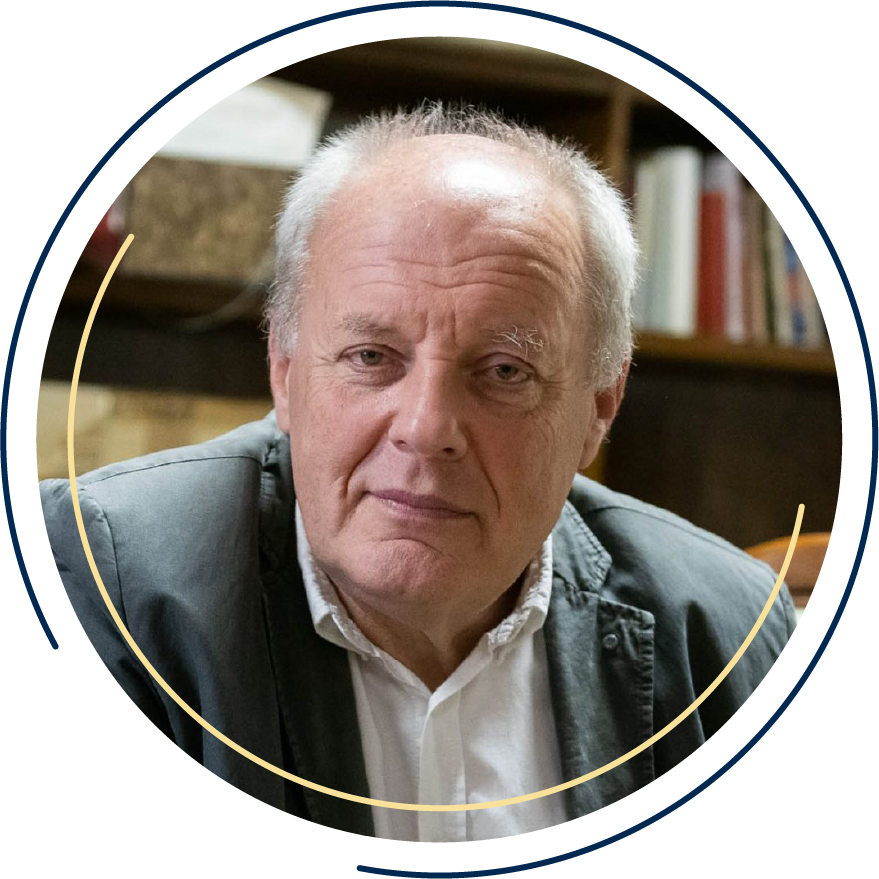
Our guests in the post-screening discussion will be historian, researcher, and university lecturer György Földes and Róbert Koltai, Jászai Mari Award-winning Hungarian actor, film director, distinguished artist, and lifetime member of the Company of Immortals.


Földesi György
                György Földesi
Koltai Róbert
                  Róbert Koltai


Trailer: https://www.youtube.com/watch?v=HXh4TNoLyF4&t=1s   

Due to limited seating, advance registration is required: https://www.ajk.elte.hu/csapd-le-csacsi-timar-peter-filmje-1990

The organizers welcome any correspondence regarding the film club at eltenfi.filmklub@elte.hu.

ELTE–NFI Film Club Facebook page


Source/author of illustration:
National Film Institute

New AI Podcast Episode: Library Spaces, Local Use

In our latest episode, you can listen to a conversation about library spaces and local use.

Step into Hungary’s first palace built explicitly for library purposes, whose certain interiors are often compared to settings reminiscent of the Harry Potter films! The Reading Hall of the building inaugurated in 1876, adorned with frescoes by Károly Lotz, offers an unparalleled atmosphere for studying, where registered readers have access to the vast core collection, and the availability of exceptional special-collection materials (e.g., incunabula and codices) is also discussed. From our podcast, you’ll learn how the library ensures seamless local use and how it supports visitors with modern technology woven into a 19th-century library palace.

The episode is available on our YouTube channel.

Source/author of illustration:
ELTE EKL

Historical development for the future of our heritage

With the support of the University, a state-of-the-art temperature and humidity control system is being installed in the storage facilities of the ELTE University Library and Archives, which houses a museum-quality library collection of European significance.

Founded in 1561, the ELTE University Library and Archives holds nearly two million documents, including books and journals supporting university education and research, 185 codices (including 14 corvina and 8 language monuments), approximately 1,200 incunabula, numerous valuable manuscripts, 11,000 16th-century antiquarian books, 15,000 Baroque books, and 75,000 18th-century volumes, making it the third largest library in Budapest. As Hungary's first state-maintained public library, one of its primary tasks, in addition to providing modern services to the university community, is to protect and showcase the priceless national cultural heritage preserved in its collection.

In order to ensure the long-term preservation of protected cultural assets, it is essential to maintain a constant temperature and humidity in the library's storage rooms, which, given today's climate conditions, can only be guaranteed by an appropriate heat and humidity control system. The development, which is being carried out with the support of the University, will enable the museum's collection to be preserved for future generations under the highest standards of conservation.

In preparation for the development, library specialists spent four months moving the entire museum storage facility within the building, including disinfecting the shelves at their final destinations and wrapping valuable bound, buckled, embossed, sealed, as well as fragile volumes and scrolls in acid-free material. The relocation involved a total of 2,737.5 linear meters of museum holdings stored on three floors and in six storage rooms in the library building on Ferenciek Square, which house the library's most valuable collection. The work took a total of 3,127.5 working hours over 53 days, with the librarians joined by numerous volunteers, including university lecturers and staff, setting a fine example of university cooperation. A total of 67 people worked tirelessly to preserve the national heritage.  Thanks to this cooperation, the library was able to continue providing its services during the move, which required special organizational and logistical efforts.

A detailed press release is available on the ELTE website.

In 2023, the ELTE University Library and Archives received a non-repayable grant of HUF 8 million under the Higher Education Library Collection Protection Support Program to install a temperature and humidity control system that will maintain the condition of protected cultural assets for a long time and ensure appropriate collection protection conditions (document number: KONYVTAR-FAT-23-0009, sponsor: Ministry of Culture and Innovation).
 
Source/author of illustration:
ELTE ULA

VUK (film by Attila Dargay, 1981, 74 minutes) – CHILDREN'S FILM CLUB

The ELTE–NFI University Film Club is hosting a film screening as part of the Santa Claus celebration organized by the ELTE Service Directorate Family Friendly Office. We warmly welcome the families of ELTE employees to the screening.

Date: December 5, 2025, 4:15 p.m.

Location: Lágymányosi Campus (1117 Budapest, Pázmány Péter sétány 1/A)

Room 100/A (ground floor, near the Gömb Aula)

The adventures of Vuk, the orphaned fox cub and hero of István Fekete's novel, remain one of the most beloved feature-length animated films among Hungarian children. The little fox cub, Vuk, is raised by his uncle, Karak, who teaches him all the tricks of the hunt. The fox cub grows into a fearsome predator. Vuk also humiliates the hunter, who destroyed his family: he cleverly plunders his poultry yard, drives his dogs crazy, and frees the fox girl imprisoned in a cage. The cartoon complements the plot of the novel with cheerful scenes.

Preview: https://www.youtube.com/watch?v=Pi-ERSPT6hc

After the screening, we will be waiting for the children with related games and activities.

Registration is avaliable at the link below until midnight on November 23, 2025:

NFI Children's Film Club – Santa Claus Celebration (December 5, 2025): VUK


Source/author of illustration:
National Film Institute

Mosaics from the heritage of ELTE – November 2025

In the footsteps of the unconscious – Rorschach and Szondi tests from the notes of Flóra Kozmutza

The document shown in the picture was handwritten by Illyés Gyuláné Kozmutza Flóra and contains the description of the answers to a Rorschach test taken by a test subject, as well as an evaluation sheet for a Szondi test, together with a detailed record of the answers and their professional coding. These two methods were among the most significant projective personality assessment techniques of the mid-20th century, designed to provide insight into the deeper, unconscious processes of the personality.

Flóra Kozmutza (1905–1995) was a psychologist and special education teacher, and one of the leading figures in Hungarian special education psychology. She completed her studies in Budapest, then worked as a student and colleague of Lipót Szondi at the Pathological and Therapeutic Laboratory of the College of Special Education Teacher Training. In connection with Szondi's scholarship diagnostic research, Kozmutza Flóra primarily examined the connections between personality development, choices, and mental structures.

Lipót Szondi (1893–1986) was a Hungarian psychiatrist who developed the theory of fate analysis and the Szondi test. According to his theory, deeply rooted, inherited instinctive forces lie behind the decisions we make in life, such as choosing a profession, partner, or career path. In the Szondi test, the test subject is shown 48 photographs depicting different psychiatric types. The subject must select the faces they find appealing and unappealing from groups of eight. From the resulting selection pattern, the psychologist draws conclusions about unconscious instinctive attitudes, hidden attractions, and aversions. During the evaluation, the repetitions and contradictions in the selections and the structure of the so-called instinct profile reveal the dynamics of the personality.

The Rorschach test is named after Swiss psychiatrist Hermann Rorschach (1884-1922). It consists of ten symmetrical inkblot images, which appear in black and white, color, and shades. The test subject is asked to describe what they see in each image—what objects, shapes, movements, or situations the image evokes in them. The examiner must record the answers verbatim, because during the evaluation, not only the content but also the manner of expression, the order of associations, uncertainties, corrections, and reaction time are significant. The interpretation is based on several criteria: it takes into account the quality of the form seen, the reaction to colors, the interpretation of movements, and the balance between the whole and the details. The results reveal the characteristics of the subject's way of thinking, emotional life, and sense of reality.

Flóra Kozmutza used both methods to gain a complex understanding of personality. The meticulousness and accuracy of her handwritten notes demonstrate not only her scientific discipline, but also the fact that preserving individual expression and psychological nuances was of utmost importance to her research. The verbatim recording of Rorschach responses and the detailed completion of the Szondi table both reflect the desire to ensure that nothing is lost in the examination of personality that could lead to a deeper understanding of the human soul.

The evaluation sheets presented here, along with other manuscripts, original typescripts, and books by Dr. Flóra Kozmutza Illyés, were added to the Special Education History Collection of the ELTE Bárczi Gusztáv Faculty of Special Education in 2024. The collection also includes original copies of the Rorschach and Szondi tests.


Sources:

Illyés Gy-né. (1987). József Attila utolsó hónapjairól. Szépirodalmi Könyvkiadó

Mérei F. (2002). A Rorschach-próba. Medicina Könyvkiadó Zrt.

Szondi L. (2007). A Szondi-teszt – A kísérleti ösztöndiagnosztika tankönyve. Új Mandátum Könyvkiadó 


Written by Veronika Bolla

Photo: The Special Education History Collection of the ELTE Bárczi Gusztáv Faculty of Special Education


Source/author of illustration:
The Special Education History Collection of the ELTE Bárczi Gusztáv Faculty of Special Education

Memories of Rivers (film by Judit Elek, 1989)

The ELTE–NFI University Film Club screening and discussion series continues. We welcome university members from all ELTE faculties.

Judit Elek's historical film presents viewers with a possible interpretation of the Tiszaeszlár affair, which began in 1882 and caused a great stir throughout Europe. Before Passover, a maid named Eszter Sólymosi disappeared in Tiszaeszlár, and this incident led to accusations of blood libel. In a small Ruthenian village, where most people earn their living as rafters, the men are preparing for another trip. The women find it difficult to let them go, as if they sense what awaits them. Sailing down the Tisza, they find the body of Eszter Solymosi and become embroiled in the Tiszaeszlár trial. The defendants are represented by Károly Eötvös, the most renowned lawyer of the time.


Date: 3 December 2025; 6 p.m.

Venue: University Square Campus (1053 Budapest, Egyetem tér 1-3, ground floor, A/1 practice room, corridor next to the cloakroom) 


Director, screenwriter: Judit Elek

Cinematographer: Gábor Halász

Editor: Katalin Kabdebó

Music: Péter Eötvös, György Kurtág

Main roles: Sándor Gáspár, András Stohl, Zoltán Mucsi, Róbert Koltai, Tamás Fodor.

Our guests in the post-screening discussion will be: Dr. Mátyás Kapa, university lecturer, lawyer, and writer, who dealt with the trial in his novel Ügyvédsors (The Fate of a Lawyer), published in 2025, and Tamás Fodor, Jászai Mari Award-winning actor, who plays Károly Eötvös in the film.

Dr. Mátyás Kapa
          Dr. Mátyás Kapa
Tamás Fodor
            Tamás Fodor


Due to limited seating, advance registration is required: https://www.ajk.elte.hu/content/tutajosok-elek-judit-filmje-1989.e.1985.

The organizers welcome any correspondence regarding the film club at eltenfi.filmklub@elte.hu.

ELTE–NFI Film Club Facebook page


Tutajosok

Source/author of illustration:
ELTE ULA

Eternal Winter (film by Attila Szász, 2018)

The ELTE–NFI University Film Club screening and discussion series continues. We welcome university members from all ELTE faculties.

Eternal Winter begins in December 1944, when Soviet soldiers take women of working age from a small Swabian village in southern Transdanubia away for „a little work”. They say they are taking them for malenkij robot, meaning they will have to work for three weeks. Irén, who is waiting for her husband to return from the front, says goodbye to her six-year-old daughter and her parents, believing that they will soon be reunited. They are loaded onto a train and, after a long and arduous journey, find themselves in a Soviet labor camp in the Donets Basin, where they are forced to work in inhumane conditions. The Swabians are treated as war criminals and held responsible for the atrocities committed by German soldiers. Here, Irén meets a man named Rajmund, who teaches her how to survive hell. A special relationship develops between the two. Will they ever find their way home? At what price does one survive hell? Can a love born in a labor camp be fulfilled when both of them have families waiting for them at home?

This is the first feature film to authentically portray the story of hundreds of thousands of Hungarians who were taken away for forced labor. Marina Gera won the International Emmy Award for Best Actress for her performance in Eternal Winter.


Date: 19 November 2025, 6 p.m.

Venue: University Square Campus (1053 Budapest, Egyetem tér 1-3, ground floor, A/1 practice room, corridor next to the cloakroom) 


Director: Attila Szász

Screenplay: Norbert Köbli

Cinematographer: András Nagy

Editor: László Hargittai

Music: Gergely Parádi

Cast: Marina Gera, Laura Döbrösi, Franciska Farkas, Sándor Csányi, Diána Magdolna Kiss


Our guests in the post-screening discussion will be Attila Szász, Béla Balázs Award-winning film director, screenwriter, and producer, and Zalán Bognár, historian, president of the International Association of Gulag and Gupvi Researchers, and researcher of the Málenkij robot (forced labour).


Szász Attila
               Attila Szász
Bognár Zalán
               Zalán Bognár  


Preview: https://www.youtube.com/watch?v=HZSTvEVz87I

Due to limited seating, please register in advance at: https://www.ajk.elte.hu/content/orok-tel-szasz-attila-filmje-2018.e.1957.

The organizers welcome any correspondence regarding the film club at eltenfi.filmklub@elte.hu.

ELTE–NFI Film Club Facebook page


Source/author of illustration:
National Film Institute